viernes, 18 de marzo de 2011

The Continental Army Faces Challenges

After many battles, wars, fighting, the Continental Army started facing challenges. In Pennsylvania, They spent a harsh winter. They did not have enough supplies or food and they suffered from hunger and cold. Washington reported that 1/3 of his 10,000 men did not have shoes or clothes.  This happenned in Valley Forge. Washington was very preoccupied, because he did not know what to do with his army. He wrotye on his diary that he had two choices, either he dispersed his army, or break it down once and for all; or else, they would die of hunger. But before he could make a desition, the soldiers improved with the help of a german called Baron Von Steuben. He taught them to survive and made them work to impose discipline on them. 

In June 1778, the British marched from Philadelphia into New Jersey, and on their way, they encountered the Continental Amy at Monmouth, where the soldiers demonstrated that they had improved their skills. Even though the British had won many battles, they had little to show, because the only city they had was New York. 

Friedrich Wilhelm August Heinrich Ferdinand von Steuben (born Friedrich Wilhelm Ludolf Gerhard Augustin von Steuben; September 17, 1730 – November 28, 1794), also referred to as the Baron von Steuben, was a Prussian-born military officer who served as inspector general and Major general of the Continental Army during the American Revolutionary War. He is credited with being one of the fathers of the Continental Army in teaching them the essentials of military drills, tactics, and disciplines. He wrote the Revolutionary War Drill Manual, the book that served as the standard United States drill manual until the War of 1812. He served as General George Washington's chief of staff in the final years of the war.


THE FRONTIER WAR

The frontier war began because of the procalamation of 1763, that started about for the Seven Year War. the proclamation was a treaty made by the king, that did not allow the expansion of land beyond the Appalatian Mountains. In the treaty, the king ordered the indians to remain west of the Appalatian Mountains. Pontiac's Rebellion inflicted a lot in this. To defy the proclamation, the indians started settling to the Appalatian Mountains, so in the year 1770, they settled west, which led to the outbreak of the war. This leaded them to claim more american land. 

Many of the indians started siding with the British, who had promised to keep the colonies to the east. The british were making the native americans attack the colonial settlers. The white settlers were killing the native americans for their land. They would always make truces, but never really kept them. it was all a cycle were they made them, broke them, made them again, broke them again. These men could never keep a promise! The war then moves to the west.

Spring 1778, in the north-west, Colonel George Rogers Clark led the patriot's militia to a fight gainst the British, He took over the settlements of Kaskajia and Cahokia. Clarck had 175 soldiers, and by later summer, the got help of some french settlers and captured all the British posts in that area. They captured Vincennes, but a few months later, the british recaptured it. In february 1774, Clarck and his men reached Vincennes again, and were trying to convince the native americans to abandon their british allies. By the end of the war, the patriot's boundary allowed the Americans to claim the Ohio River Valley. At the same time, in New York, native americans and British forces attacked many froentier posts. In response, the patriot's burned 40 Iroquois towns, which destroyed the power that their nation used to posses. Indians continued their attacks to the settlers, ones that left deadly effects. 

Now, to relax a little bit from all these wars and battles, I'll show you something that may be completely out of the topic, but it's actually sort of interesting:


War Shifts to the Middle States

On december 26th, another battle occured. it was called the Battle of Trenton. General George Washington corssed the Delaware River north of Trenton, New Jersey. He lead the main body of the Contiental Army agains the Garisson, which was a body of troops stationed in a fortified place. After a small battle, almost the entire Hessians were captured.


In the same year, Washington won another battle. the Battle of Princeton. He inflicted on Charles Corwallis's troops and injured many of his soldiers. On fall 1777, he lost Philadelphia, but they still didn't win the war. General John Burgoyne marched from Canada along with his troop to invade New York's Hudson Valley. Unfortunetely for them, they fell into a patriot's trap in Saratoga and he had to surrender in october the same year. In Saratatoga, the patriots defeated Burgoyne, and you could say that it was one of their greatest victories. Saratoga suggested that US might win the war. They were starting to have faith in them.

After all of this, Europeans started entering the war. The battle of Saratoga made them gain interest. This made France recognize the independence. Now, they had a chance to weaken the British, their old enemies. During the first years of the war, the French really doubted that the patriots would win, so they did not openly confirm that they were allying with the patriots, so they helped them with secret shippings, with ammunitions and weapons. This was the only thing keeping the patriots alive. French volunteers, and Marquis de Lafayette provfided a lot of help for the patriots. Saratoga also, made the French see that the patriots did have a chance to win the war, and that they did not face any risks in an open alliance. So, in february 1778, they negotiated the alliance.

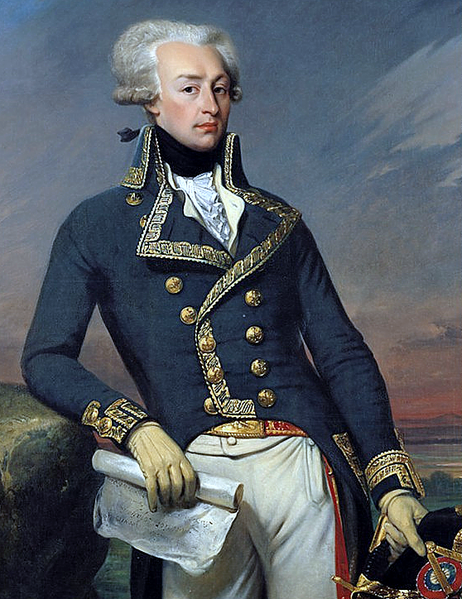
  Marie-Joseph Paul Yves Roch Gilbert du Motier, Marquis de La Fayette. 6 September 1757 – 20 May 1834), often known as simply Lafayette, was a French aristocrat and military officer born in Chavaniac, in the province of Auvergne in south central France. Lafayette was a general in the American Revolutionary War and a leader of the Garde Nationale during the French Revolution.

In the American Revolution, Lafayette served as a major-general in the Continental Army under George Washington.

Benjamin Franklin was a ledaing american negotiator in Paris and became popular when he was in France. he becanme known as a simple american who loved the french.
Alliance was made, and the French Army and Navy began attacking the British, so the war became more even. The first tries were miserable, but at the end, the alliance produced the biggest victory if thewar in 1781.  British were suffering from this, and suffered even more when Spain entered the war as a French ally in 1779. Spain's purpose was also to weaken the British, but they were not an official ally of the French because they feared that fighting in this war would inspire their own colonists desire independence. Bernardo de Galvez (a spanish governer) provided the patriots with supplies and money, and also prevented british ships to enter the Mississipi Delta. Both of this allies helped the colonies incredibly.
Benjamin Franklin (January 17, 1706 – April 17, 1790) was one of the Founding fathers of the United States. A noted polymath, Franklin was a leading author and printer, political theorist, politician, postmaster, scientist, inventor, satirist, civic activist, statesman, and diplomat. As a scientist, he was a major figure in the American Enlightement and the history of physics for his discoveries and theories regarding electricity. He invented the lighting rod, bifocals, the Franklin stove, a carriage odometer, and the glass 'armonica'. He formed both the first public lending library in America and the first fire department in Pennsylvania. Franklin earned the title of "The First American" for his early and indefatigable campaigning for colonial unity; as an author and spokesman in London for several colonies, then as the first United States Ambassador to France, he exemplified the emerging American nation.


The Patriot's Strength

After everything that the patriots had been through, they were getting really tired and they were loosing their strength, the only person that could get them to keep going, and never give up was George Washington. He was a great leader. During these hard times, he read "American Crisis" to his soldiers to preserve them. This kept the soldiers comitted to their jobs even thought they were facing hunger and cold.

To succeed, the continental army needed the support of their people. The woman were very strong during these times, and their work was fundamental. They allowed their husbands and sons to fight in the war, which freed their worried souls. Women used to make shoes, blankets, and clothing, British navi blocked the ports, causing the items to become comre expensive or scarce. Colonial took advantage of this situation and started selling items at a very high price, and the value of moent decreased, because patriots were using paper money.


The paper money issued by the continental congress were called continentals. The army received their salary in this type of money. Women also received money for their work of mantaining camps. Some women would even dress up as soldiers to fire cannons. They were very comitted to their people.

One very recognized woman was Deborah Sampson. She received a military pension from the congress to pay for her services. Another woman was Mary Hays. she was became known as Molly Pitcher, because she used to take water to the troops. She started doing this at Monmouth. As you can see, women defended their people with even more courage and determination than men.

Disguised as a man, Deborah Sampson served admirably as a soldier in the Continental army during the American Revolutionary War (1775–83) and later gave speeches about her time in the military. She established a public presence for women that went far beyond the normal cultural limits of her time. The former soldier then went on to become a wife and mother. She asked for and received a military pension (money benefits) from the U.S. government, also unheard of for a woman of her time.
Deborah Sampson was born on December 17, 1760, to a poor family in Plympton, Massachusetts (located near Plymouth, Massachusetts). Her father, Jonathan Sampson Jr., deserted his family to go to sea.
                                                                                                                                                                        

Molly Pitcher

You can notice easily that the patriot's strength was based in the civilians colaboration, the leadership of George Washington, the Indian War tactics, and the fact that they were united for the same purpose. This helped the patriots a lot and gave them the strength they needed.

jueves, 17 de marzo de 2011

Turning Points of the War

As mentioned before, the independence was not quite conceived yet. To make it a reality, the patriots had to wing a war against the British, which at the time, was the most powerful empire in the world.

At the beginning of the war, the British seemed to have much more advantages than the colonist. they had more weapons and ships. The continental congress had problems with paying the war, so they started printing money, causing inflation. the continental congress did not have enough supplies and were starving and suffering from the cold weather. the British, on the other hand, had lots of supplies. Everyone believed that the patriots had no chance at all.

the British were very confident with themselves and they did not take patriots seriously. They thought that they had already won the war. In June 1775,  "The Battle of Bunker Hill" took place. This was one of the most important victories during the process of independence. This battle made the British and the Colonists realize that it was not just one war that would determine the winner. It took place because the British wanted to ocuppy the Dorchester Heights on the Boston Peninsula. The colonists found out about this plan and decided to take action. They had to protect their freedom and land.


The General William Howe led the Birtish troops to attack Breed's hill during the Battle of Bunker Hill. The patriots had fought with all their energy, but unfortunetely, they ran out of ammunition, and the British were able to capture the hill.

                                                                                                                                                
William Howe was one of the British generals during the Revolutionary War. He was born on August 10, 1729, in England. He was the illegitimate uncle of King George The Third, who was the British king during the Revolutionary War. Before he was sent to fight in the war, Howe was sympathetic to the colonists. But, as a soldier, he had to fight against them.

Lord Howe continued to attack. Once he defeated the Continental Army and took over many sea ports, he thought that Philadelphia Patriots would stop. The British lost the war because they were using the wrong strategy. Only the patriots understood that they had to win the hearts and minds of the people. It was the Revolutionary War that was going on, not just any war. Patriots kept on fighting no matter what. they were persevering. 


Here, you can notice that it was not only just a war in which the people only demonstrated their physical skills. The Revolutionary War was much more than this. It was people united fighting for something strong that they believed in.

viernes, 25 de febrero de 2011

Thomas Paine's Radical Proposal

Now, you already know that Thomas Paine wrote the book "Common Sense". But here is a short biography, to let you know a little bit more about his life:


Thomas Paine is a fascinating figure from the history of American politics. Born in February of 1737, he published numerous pamphlets and contributed valuable insights to the political discourse of his time; the depth of his impact on American society is impossible to know.
Tomas Paine was born in rural England. In early life, he attended grammar school and then was apprenticed to his father, who was a corset stay maker. After a brief stint as a privateer, he became a master stay-maker and opened up a shop. He married in 1759, but his wife died of complications from her first pregnancy. In England he was involved in a brief second marriage and various business and civic ventures until, legend has it, Benjamin Franklin suggested that he immigrate to America. After a difficult passage that took him some weeks to recover from, he gained citizenship in the colonies and started work editing Pennsylvania Magazine–a post he would follow with an illustrious career as a propagandist and writer.


So, now Thomas Paine's influence was not quite over with the book. He proposed a totally different direction on things, which where:
1)Independence from Britain.
2)Republican State Government.
3)Union of States.

Paine saw the king and the Aristocrats as parasites and frauds. He thought that the king was an enemy to the American Liberties. He wanted common people to elect the government, and he did not like the class structures that were marked. Of course, he also hated the smothering of people just because they did not have a noble title. His ideas were, to create a republic where everyone had the opportunity to improve. By uniting to create a republic, America would be a role model for the rest of the countries. He wanted to create a democratic model so that he could achieve this. 

In spring of 1776, Pain's ideas made the independance possible. The congress selected a committee to draft the declaration of independance, and explain the reasons in it, Thomas Jefferson, was the man for this job.  On July 2nd, America was free. I'm guessing you all know what happened the 4th of July? the Declaration of Independence was approved!. 


As told before, the declaration of independence contained some of Paine's ideas; like denouncing the king as a tyrant, and the idea that all men were created equal and born with natural rights that could not be taken away by the governement. These natural rights were called the unalienable rights by Jefferson. Although, it seems like the whole independance process is complete, unfortunetely, it is not. writing a declaration of independence was very different from actually achieving it. The colonists had to have the courage to face the many obstacles that were presented to them, before succeeding on their major goal. First, they had to declare independance from an European empire.


In conclusion, we could say that the declaration of independance was nothing but a long list of colonial grievances that were just taken in consideration, but did not really mean the absolute independance from this empire. Imagine how hard it was back then?


Loyalists oppose to Patriot's Demands

A series of events were responsible for the Revolution. John Adams and Jonathan Sewell were discussing the crisis. This happened in summer 1774. Sewell told Adams that England was not going to change. He had to accept it, or deal with the consequences. Adams replied that event though he knew that was the truth, he would still remain in his own determination. 

According to stereotypes, many loyalists were wealthy. Others were just farmers. They did not like taxes, or having to pick a side. they also disliked the Militia. They resented the Patriots because they shut down the Loyalists' newspaper. They appealed to the Native American and the enslaved people. Indians wanted hel`from the British to stop the settlers from moving. Most people preferred to join the British, because they considered them as the true champions of Liberty.


Later on, in January 1776, a book was published. It was short but powerful, in favor of independence. it was called "The Common Sense", written by Thomas Paine, but first published anonymously. Thomas Paine came from England. He used to be a tax collector and an artesan. Some of his ideas can be seen in the Declaration of Independance. 


"COMMON SENSE"
Published anonymously by Thomas Paine in January of 1776, Common Sense was an instant best-seller, both in the colonies and in Europe. It went through several editions in Philadelphia, and was republished in all parts of United America. Because of it, Paine became internationally famous.
"A Covenanted People" called Common Sense "by far the most influential tract of the American Revolution....it remains one of the most brilliant pamphlets ever written in the English language."
Paine's political pamphlet brought the rising revolutionary sentiment into sharp focus by placing blame for the suffering of the colonies directly on the reigning British monarch, George III.


I would very much enjoy reading this book, for it seems that it really meant a lot for the American Revolution. It was necesary to create conscience on this people.

"He that rebels against reason is a real rebel, but he that in defence of reason rebels against tyranny has a better title to Defender of the Faith, than George the Third."- Thomas Paine

The Second Continental Congress

The Revolution was starting now, and the colonies had to find a way to get together. In 1775, delegates from all the colonies, assembled in Philadelphia, and the Congress was bravely assuming the responsability for the war. The New Continental Army was created during this Continental Congress, and the command was given to George Washington, who was a colonial officer during the French and Indian War. In those times, Virginia was considered the most powerful colony, so having someone from Virginia in the Congress, would clearly help a lot. Fortunetely, George Washington was born in Virginia. Some members of the Continental Congress wanted to declare independence from Britan, but they believed that not all the colonists were ready for this. On July 1775, after 3 months of war, the Congress sent an "Olive Branch Petition", which represents peace. They sent it to the king, but he rejected it and instead of accepting peace, he sent new troops to Boston.